August 2026 Meeting Recap
Lithium-Ion Battery Hazards and Safety Management
A special thank you to Jeff Romine for delivering an outstanding and informative presentation on lithium-ion battery hazards and safety management. Jeff provided valuable insights into:
- Common battery failure modes, including thermal runaway, fire, explosion, toxic gas release, and reignition hazards.
- Causes of battery failures such as mechanical damage, overcharging, improper chargers, manufacturing defects, and physical impacts.
- Emergency response best practices, including immediate evacuation, contacting the fire department, isolating the area, and treating incidents as hazardous materials events.
- Workplace risk assessment and control measures, including battery inventories, charging station evaluations, damaged battery storage, employee training, and use of OEM batteries and chargers only.
- Technical explanations of battery construction, off-gassing hazards, counterfeit battery risks, and lessons learned from real-world incidents.
- Safety considerations for large-scale battery storage systems, electric vehicle batteries, and compliance with NFPA and International Fire Code requirements.
The discussion concluded with a Q&A session covering battery life expectancy, charging practices, forklift battery applications, and storage considerations for large battery systems.
Additional Resources Available
Jeff generously offered continued support to chapter members. Participants may contact him for presentation materials, additional technical information, or guidance on lithium-ion battery safety topics. He also offered to provide on-site training sessions for organizations and fire departments at no charge.
Upcoming Event: Workers’ Comp 101
Mark your calendars for September 17 for our Workers’ Comp 101 training event at Southern Champion Tray – Center South.
This three-hour program will feature representatives from the Tennessee Bureau of Workers’ Compensation, including administrators and a judge, providing valuable insight into Tennessee’s workers’ compensation system.
Registration will be handled directly through the Tennessee Bureau of Workers’ Compensation rather than the normal ASSP registration process. Please share this opportunity with colleagues in safety, human resources, and SHRM-related roles who may benefit from attending.
July 2026 Meeting Recap
Thank you to those that were able to attend our July meeting. Here is a recap. The presentaiton is also on our chapter website.
- Industrial Hygiene Overview and Principles: Steve Tobias from Tennessee OSHA delivered a comprehensive presentation on industrial hygiene, covering its definition, importance, and the investigative nature of health hazards.
- Definition and Scope: Steve Tobias explained that industrial hygiene focuses on identifying, evaluating, and controlling workplace health hazards, emphasizing that it is often less visible than safety hazards and involves long-term exposure risks such as chemical, biological, and physical agents.
- Investigative Approach: Steve highlighted the investigative aspect of industrial hygiene, noting that many health hazards are not immediately apparent and require careful monitoring and analysis, such as recognizing symptoms that may develop over years and linking them to workplace exposures.
- Routes of Exposure: The presentation detailed the main routes of hazardous exposure—namely inhalation, ingestion, skin absorption, and injection—with examples such as chemical splashes, inhalation of fine particulates, and ingestion of toxic substances through contaminated hands.
- Short-Term vs. Long-Term Effects: Steve emphasized the importance of recognizing short-term symptoms of exposure to prevent chronic health effects, advising that workers should be trained to identify and report symptoms promptly to supervisors for timely intervention.
- Industrial Hygiene Sampling and Monitoring: Steve Tobias described the processes and resources available for industrial hygiene sampling and monitoring, including air and biological sampling, use of external laboratories, and the availability of free consultative services from Tennessee OSHA.
- Sampling Methods: Steve outlined various sampling methods such as air monitoring, biological monitoring, and bulk sampling for substances like asbestos and cutting fluids, explaining that these methods help determine exposure levels and identify hazards.
- External Laboratory Services: He mentioned that organizations can use external laboratories like SGS, Eurofin, MET, or MSE for sample analysis, and these labs can provide certified industrial hygienists to guide sampling and interpretation of results.
- Tennessee OSHA Consultative Services: Steve explained that Tennessee OSHA offers a free consultative service for businesses, which includes hazard evaluation and sampling without issuing citations, though there may be a waiting period and eligibility requirements based on company size.
- Self-Monitoring and CIH Requirements: In response to a question, Steve clarified that anyone can perform industrial hygiene sampling and analyze results; a Certified Industrial Hygienist (CIH) is not required unless specialized tasks such as asbestos abatement are involved.
- Hazard Recognition, Controls, and Standards: Steve Tobias discussed the anticipation, recognition, evaluation, and control of workplace hazards, including engineering and administrative controls, PPE, and the application of state and federal standards such as Z1A tables and expanded health standards.
- Hierarchy of Controls: Steve described the hierarchy of controls for managing exposures: elimination, substitution, engineering controls, administrative controls (such as employee rotation), and personal protective equipment (PPE) as the last resort.
- State vs. Federal Standards: He explained differences between Tennessee OSHA and federal OSHA standards, noting that Tennessee can enforce stricter exposure limits (e.g., for carbon monoxide) and that compliance requires referencing the appropriate Z1A tables.
- Expanded Health Standards: Steve reviewed expanded health standards for substances like silica, lead, cadmium, asbestos, and methylene chloride, emphasizing the need for exposure monitoring, medical surveillance, and training when action levels are exceeded.
- Hazard Communication and Training: He stressed the importance of hazard communication (HASCOM) and regular training, noting recent updates to directives and the need for ongoing education to prevent complacency in hazard recognition.
- Specific Industrial Hygiene Hazards and Case Studies: Steve Tobias provided real-world examples and case studies of industrial hygiene hazards, including chemical exposures, silica dust, welding fumes, noise, biological hazards, and combustible dust, illustrating the practical application of standards and controls.
- Chemical and Biological Exposures: Steve shared case studies involving chemical exposures (e.g., carbon monoxide, arsenic, methylene chloride) and biological hazards (e.g., bloodborne pathogens, insect stings), highlighting the importance of proper controls and incident investigation.
- Silica and Dust Control: He discussed silica exposure in construction and general industry, describing engineering controls such as integrated water systems and HEPA vacuums, and the need for exposure assessments and objective data.
- Noise and Welding Hazards: Steve explained noise monitoring requirements, the impact of equipment modifications (e.g., removing air mufflers from pneumatic tools), and proper sampling techniques for welding fumes, including the importance of sampling inside the welding helmet.
- Combustible Dust Incidents: He described recent incidents involving combustible metal dust (e.g., titanium), the risks of static ignition, and the need for production shutdowns and engineering solutions to prevent further explosions.
- OSHA Inspection Processes and Complaint Handling: Steve Tobias answered questions about Tennessee OSHA’s inspection processes, explaining the prioritization of accidents, fatalities, targeted inspections, referrals, emphasis programs, and the increasing volume of complaint-driven inspections.
- Inspection Prioritization: Steve outlined the hierarchy for inspections: fatalities and accidents are addressed immediately, followed by targeted (general schedule) inspections, referrals, emphasis programs, and finally complaints, which now constitute the majority of inspection triggers.
- Complaint Volume and Handling: He noted a dramatic increase in complaints, largely due to online submissions, and described the process for handling formal and informal complaints, including complaint-by-letter procedures and the challenges of addressing non-serious issues.
- Impact on Compliance Officer Experience: Steve discussed how the shift to complaint-driven inspections has reduced opportunities for compliance officers to gain broad experience, leading to higher turnover and less hands-on learning compared to earlier years.
June 2026 Meeting Recap
Thank you to everyone that was able to join the virtual meeting today. Below is an AI generated summary from the meeting for those that weren’t able to attend. Mark your calendar for our July meeting on, July 17 hosted at Sothern Champion Tray.
- Conference Best Practice Takeaways: Discussion on key learnings from recent safety conferences, including the Tennessee Safety and Health Conference, Safety Fest, ASSP, and NECA, focusing on AI in safety, generational training differences, blended safety approaches, and technical updates.
- AI in Safety Technology: John described the implementation of AI-powered forklift camera systems (Matrix Omni Pro) discussed at the Pulp and Paper Safety Association conference, which can detect pedestrians—even partially obscured—and automatically slow or stop equipment to prevent incidents. The technology is also being adapted for use with secondary safety guards, such as shrink wrappers, to enhance workplace safety.
- Psychosocial and Generational Training: Trent and Darrell shared insights from ASSP and Safety Fest on the importance of addressing psychosocial factors, burnout, and generational differences in safety training. They emphasized using short videos, interactive tools, and microlearning to engage younger workers, while also fostering two-way conversations and empathy in leadership.
- Blended Safety Approaches: Amy and John discussed the value of blending traditional safety management (Safety I) with human and organizational performance (HOP/Safety II) principles, as advocated by Scott Gaddis at the Tennessee Safety and Health Conference and VPPPA. This approach combines compliance, root cause analysis, and learning from incidents with a focus on system improvements and employee engagement.
- Behavior-Based Safety and Leadership: Jerry and Trent highlighted the shift in behavior-based safety from focusing solely on worker actions to also considering leadership behaviors. They stressed the importance of leaders listening first, building relationships, and modeling desired behaviors to create a sustainable safety culture across generations.
- Technical Updates: Fall Protection and HAZCOM: John summarized technical updates from the Nashville conference, including new ANSI standards for fall protection lanyards (Class 1 and Class 2 SRLs) and common HAZCOM compliance gaps identified by TOSHA, such as lack of program ownership, insufficient training, and annual requirements for multi-employer worksites and temporary employees.
- Chapter Membership and Financial Status: John provided an update on chapter membership trends, financial stability, and the chapter’s recognition status, noting a decline in membership but a strong financial position with nearly $30,000 in reserves and successful completion of required reports for bronze-level recognition.
- Membership Trends: John reported a decline in chapter membership from 99 to 84 over the past year, attributing this to fewer meetings and companies no longer covering membership costs. He encouraged members to recruit colleagues from the region to join and emphasized the goal of increasing chapter activity.
- Financial Health: The chapter is financially stable, with over $1,000 gained this fiscal year and nearly $30,000 in the bank. Revenue comes from chapter dues and interest, with minimal expenses due to limited activities in recent years.
- Recognition and Reporting: By holding four meetings and submitting required financial and leadership reports on time, the chapter achieved bronze-level recognition for the first time since the 2020-2021 fiscal year.
- Chapter Operations and Participation Opportunities: John outlined upcoming meetings, the election cycle, and opportunities for members to participate in board roles, special projects, hosting, and presenting, inviting members to express interest in leadership or support positions.
- Board and Volunteer Roles: John explained the two-year election cycle, with the next board elections in spring 2027, and encouraged members to consider board or support roles, such as membership chair, meeting chair, or website/social media coordinator. He noted that participation can count toward CEUs for certification holders.
- Hosting and Presenting: Members were invited to host meetings, present on topics of interest, or organize facility tours. John requested that interested members contact him to coordinate future events, with flexibility on meeting days to accommodate tours.
- Future Meetings and Topics: John announced the next chapter meeting on July 17th, focusing on industrial hygiene with Steve Tobias from TOSHA, and discussed plans to make meetings hybrid and to fill the fall schedule with member-hosted events and tours.
- Upcoming Meeting Details: The July meeting will be held at Southern Champion Trade Center South, with efforts to make it hybrid for broader participation. The topic will be industrial hygiene, covering air sampling, noise, and compliance expectations from TOSHA.
- Call for Hosts and Presenters: John encouraged members to volunteer their sites for hosting meetings or tours and to present on topics relevant to their organizations, aiming to increase engagement and diversify meeting content.
- AI and Industrial Hygiene Applications: Cory shared that Duracell is actively implementing AI to streamline industrial hygiene processes, such as data analysis for noise and chemical sampling, and expressed interest in the upcoming meeting’s focus on this topic.
- AI in Industrial Hygiene: Cory explained that Duracell is using AI to analyze industrial hygiene data, aiming to reduce hands-on sampling and adopt more qualitative approaches for hazard mitigation, which is expected to save time and resources.
- Leadership Changes and AI Focus: Duracell’s new plant manager will dedicate part of their role to AI implementation, reflecting the company’s commitment to integrating advanced technology into safety and health processes.
2025 Technology on Tap
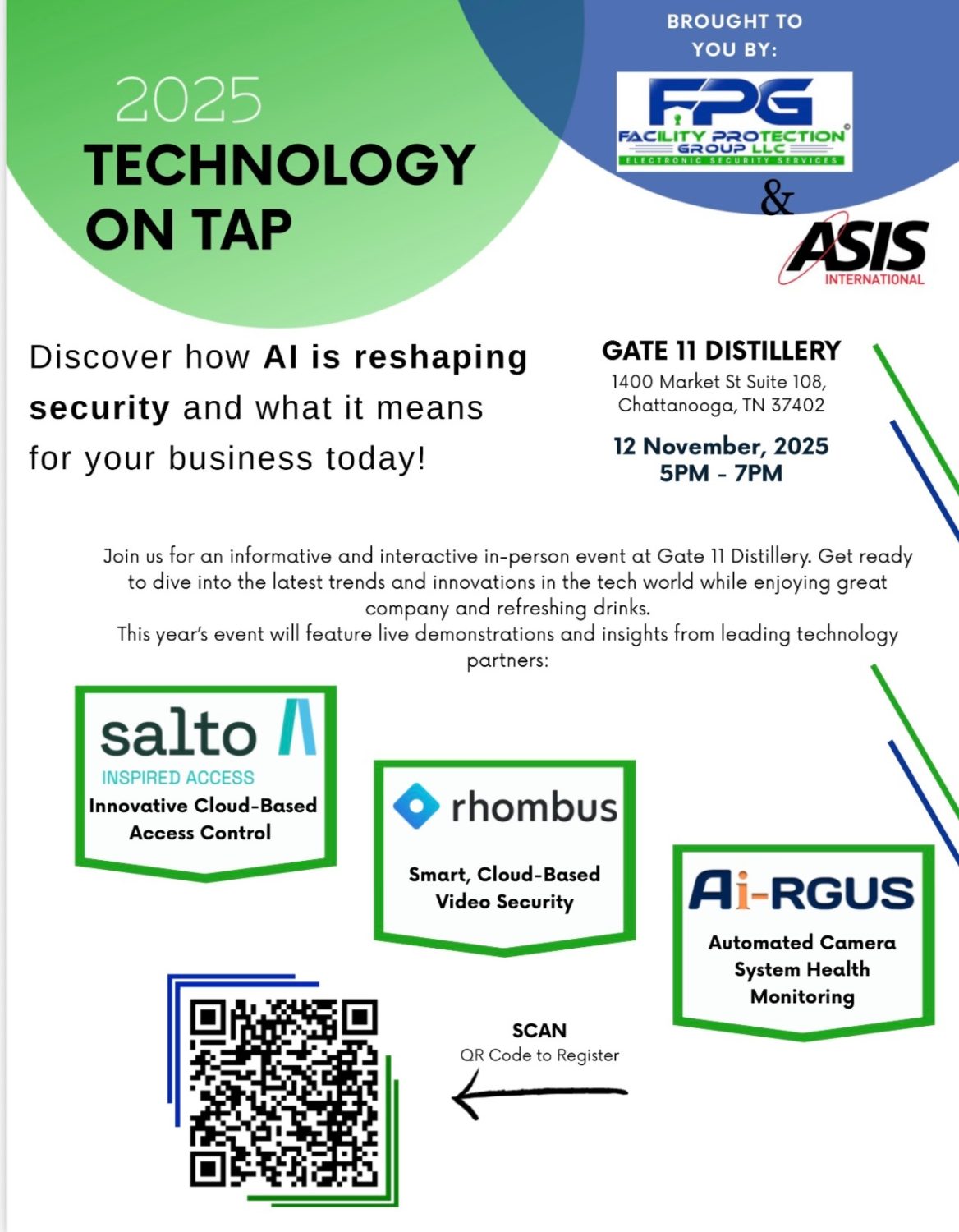
2025 Technology on Tap brought to you by FPG.